2000 Years of History

York is a city with 2000 years of History and the four different pits you can explore in DIG each based on actual archaeological digs.

At DIG, you’ll grab a trowel and become an archaeologist for the day! There are four different pits for you to explore. Each one shows what life looked like in York at a different time in the past.

These pits are based on real excavations carried out by York Archaeology. When we put them together, they tell stories from nearly 2,000 years of York’s history!

Blake Street

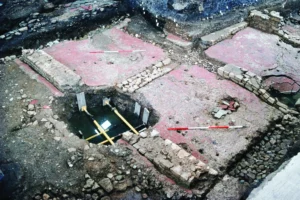
Let’s start nearly 2,000 years ago, in Roman times. This pit is based on a dig at Blake Street in York, where archaeologists uncovered part of a Roman army building from the 2nd century. It stood right in the middle of the fortress that once filled this area. Back then, people called York Eboracum, and Roman soldiers lived and worked here. Thanks to discoveries like this—and others from Roman sites around the city—we can learn what life was like for the soldiers who helped shape the York we know today.

Coppergate

Now we jump ahead to the Viking Age! This pit is based on the world-famous dig at Coppergate—the excavation that inspired the JORVIK Viking Centre. Archaeologists uncovered Viking homes, workshops and backyards filled with clues about daily life over 1,000 years ago. These amazing discoveries give us a glimpse into the everyday lives of the men, women and children who lived and worked in Viking York. They show us what people ate, the jobs they did, and even the games their children played.

Fishergate

After that, we move into the Middle Ages. This pit is based on a dig at Fishergate, where archaeologists uncovered the remains of St Andrew’s Priory—a medieval church that was once home to a community of priests. Nearby, they also found a cemetery, with graves belonging to some of the people who lived and worked there. The priory was one of many religious houses closed down during the time of Henry VIII. These discoveries help us imagine what life was like in a quiet religious community hundreds of years ago.

Hungate

Our last stop takes us to the Victorian period, just over 100 years ago. This pit is based on a dig at Hungate, a busy part of York where many families lived in small, crowded houses. Back then, it was known as a slum area, and life was often hard. Archaeologists found pots, toys and tools that show us how people cooked, worked and played, even in tough conditions. Hungate was once part of a famous study of working-class life—and thanks to finds like these, we can bring those stories to life today.