
Archaeological Conservation:
Saving Treasures from the past
Discover some of the ways artefacts can be preserved and what they can tell us about the past through Archaeological Conservation.
At DIG and across York Archaeology (the team who care for the objects you see in our displays), archaeologists don’t just dig things up. They also work hard to protect them.
Many of the objects found in York are hundreds or even thousands of years old. Once they come out of the ground, they can start to change very quickly. This is where conservators come in.
A conservator is a bit like a doctor for artefacts. Their job is to care for historic objects and help them survive into the future, so we can still learn from them long after they are discovered.
How conservators look after objects
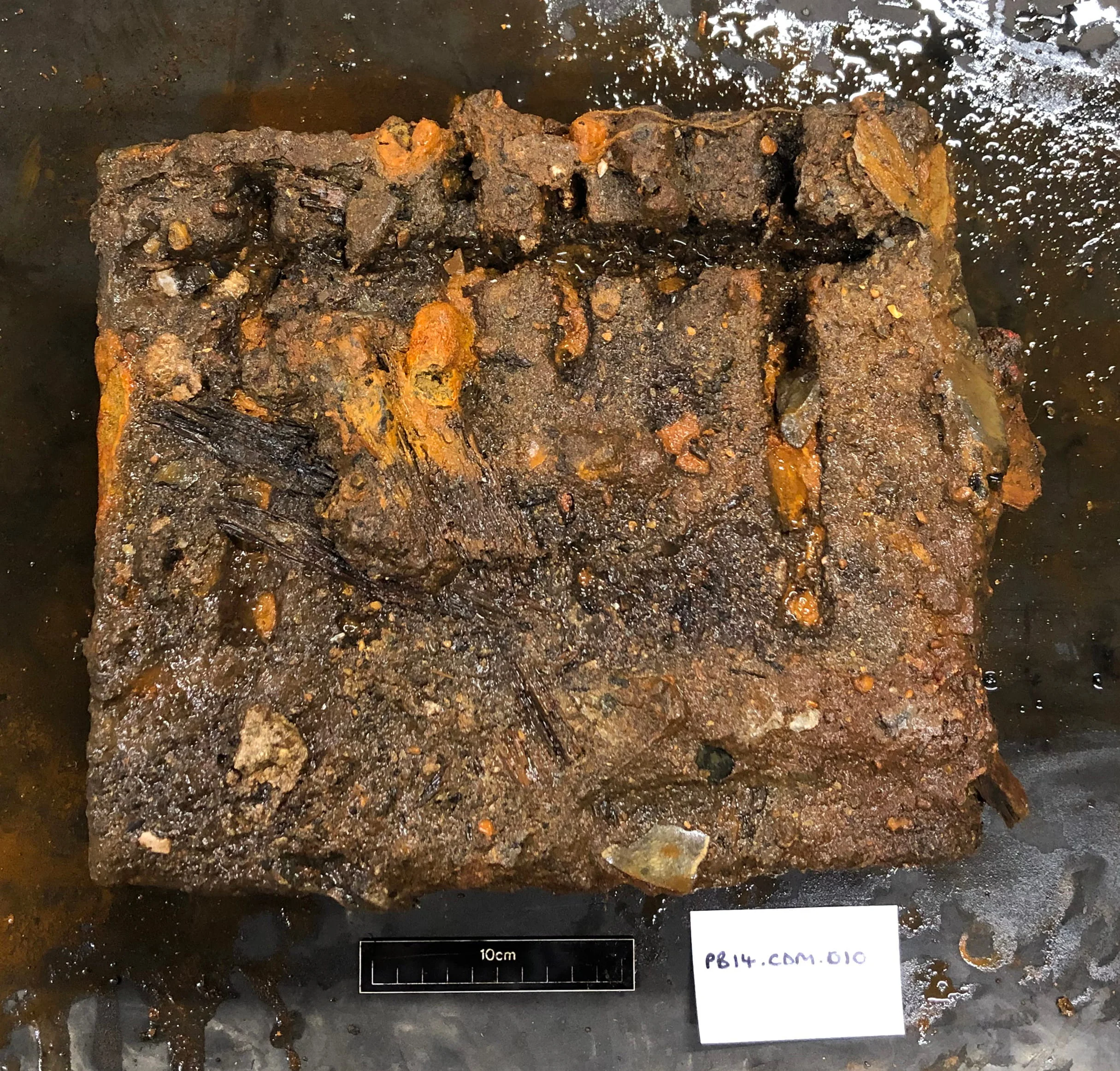
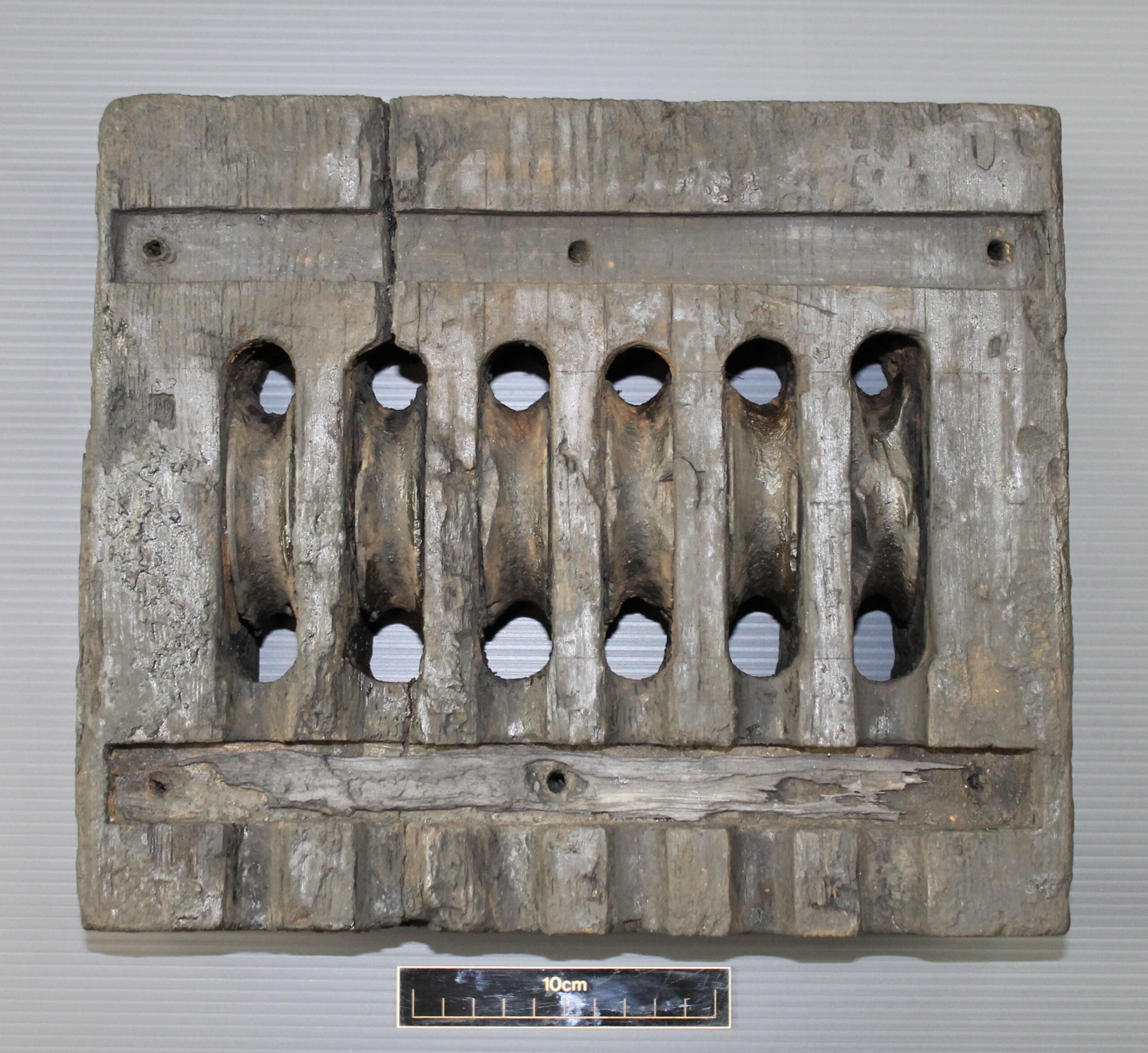
Psst… want to see conservation in action? Take a look at this pulley from Quayle Dock on the Isle of Man. Use your mouse or finger to compare the before and after.
Conservators work with all kinds of finds, including jewellery, pottery, wood, leather, metal and even ship timbers.
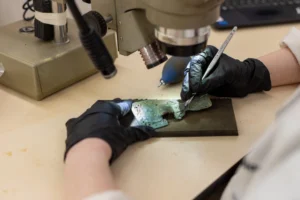
Each object is different. So, conservators begin by carefully studying it. They look at what it is made from, what condition it is in, and what might cause damage in the future. After that, they choose the safest way to protect it.
Some of the things conservators do include:
- carefully cleaning objects to remove dirt and corrosion
- repairing broken pieces so they can be understood again
- stabilising fragile materials so they do not fall apart
- using scientific tools to examine objects without damaging them
- controlling light, temperature and humidity in storage areas
- recording every step of their work
Importantly, conservators do not try to make objects look new. Instead, they aim to keep as much of the original material as possible, while preventing further damage.
Looking inside objects with X-rays
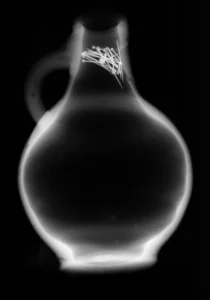
Some objects arrive covered in soil, rust or corrosion. At first glance, it can be difficult to tell what they are. To help with this, conservators use X-rays.
X-rays allow them to see inside objects without opening or damaging them. As a result, hidden shapes, decoration or repairs can be revealed, even when nothing is visible on the surface. Sometimes, objects that look like lumps of rust turn out to be something completely different — such as a key, a tool, or a decorated weapon fitting.
At York Archaeology, thousands of objects have been X-rayed. Metal finds are most common, but wood, leather, jet and even nails have also been studied this way. X-rays help conservators decide what to do next and how best to care for each object.
When objects come from water
Some of the most fragile objects come from wet or underwater environments, including shipwrecks. When objects sit underwater for a long time, they absorb salts from the water around them. Once they are brought out, these salts can cause serious damage as they dry and form crystals inside the object.
To prevent this, conservators place objects in clean water baths. The salt slowly moves out into the water over time through a process called desalination. This can take weeks, months or even years depending on the object. Some iron objects take especially long, as they can hold large amounts of salt.
In some cases, conservators carefully adjust the chemistry of the water to help protect the object while the salts are being removed.
Removing hard burial layers from the sea (concretion)
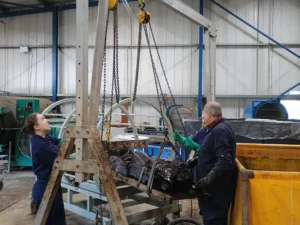
Objects from the sea are often covered in a hard, rocky layer called concretion. This forms over many years as sand, shells and minerals build up around rusted objects. At first, concretion can be helpful because it protects the object underwater. However, once it is removed from the sea, it can trap moisture and salt inside, which may cause damage.
Before removal begins, conservators often take an X-ray to see what is hidden inside. This helps guide the work. The concretion is then carefully removed using tools such as chisels and fine instruments. However, if removal would damage the object, part of the concretion may be left in place to keep it safe.
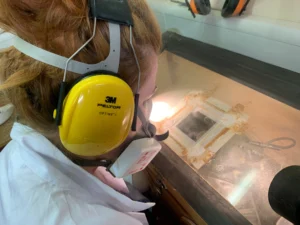
Cleaning with air abrasion
Some objects are too delicate for normal tools, but their surface is too hard to clean by hand. In these cases, conservators use air abrasion.
This works a bit like a small, controlled sandblaster. A stream of air carries fine particles that gently remove dirt or corrosion (the rough, rusty layer that forms as metal slowly breaks down over time). The pressure can be adjusted depending on the object. Air abrasion is often used on small metal objects. It can also reveal hidden decorations that have been buried beneath these layers for hundreds of years.
Saving wet wood
Wood that has been buried in wet ground or underwater can survive for a very long time, but it becomes extremely fragile. While it is buried, tiny bacteria eat away at the inside, until it becomes like a large sponge. Water fills the wood and helps it keep its shape while it is wet, however If it dries without conservation it can shrink, crack or collapse.
To prevent this, conservators replace the water with a special wax called PEG (polyethylene glycol). PEG soaks into the wood and supports its structure. This process can take a long time, depending on the size of the object.
Once treated, the wood is frozen and placed in a freeze-dryer. As it dries, the water turns directly into vapour and leaves the wood without causing damage. This careful process helps preserve large objects such as ship timbers so they can be studied and displayed.
Keeping a record
Conservators always write down what they do. These records describe the object’s condition and every treatment it has received. This is important because future conservators may need to understand or even reverse earlier work.
Protecting Museum Objects
Once objects are conserved, they still need protection. Museums and archaeological stores work hard to prevent damage from threats such as light, water, pests, heat and pollution.
Conservators describe these risks as the “agents of deterioration”. These include:
- physical damage
- theft or vandalism
- fire and water
- pests such as insects or rodents
- dust and pollution
- too much light
- incorrect temperature or humidity
- loss of information about an object
Different teams work together to manage these risks and keep collections safe.
Why conservation matters
Conservation is what allows us to continue to see, study and understand archaeological objects today. Without it, many artefacts would quickly break down once they are uncovered.
From prehistoric tools to medieval pottery, from Roman jewellery to historic ship timbers, objects from the past are often fragile. Burial conditions can preserve them for centuries, but once they are exposed to air, light and changes in humidity, they can begin to deteriorate very quickly.
Thanks to conservators, these objects can be stabilised and cared for so they can continue to be studied and displayed. In doing so, they help tell stories about how people lived, worked, travelled and created across thousands of years of history.
So when you see an artefact in a museum or display, remember: it is not just an old object. It is something that has been carefully preserved, piece by piece, by modern experts working behind the scenes to protect the past for the future.